
Good. Entertaining. Strange.

I LIVE MY LIFE IN STORIES
Mara woke before the alarm and immediately remembered that her husband did not want her anymore.
There were mornings when the knowledge arrived slowly, giving her a few merciful seconds before it settled back into place. This was not one of them. This morning, it was waiting for her. She lay in bed and cried for the man who had left her until crying became something uglier than tears—something closer to wailing, although she would never use that word if anyone asked.
Then she stopped.
She washed her face, covered the evidence, fixed her hair and painted herself back into the woman everyone expected to see. She buttoned herself into a suit, slipped her feet into heels and put on the invisible armor required of a woman who could fall apart at six in the morning and command a courtroom by nine.
From a distance, Mara’s life looked ridiculous.
Some people saw her online and decided she was a dramatic teenager who had somehow been handed the keys to an office building. She said what she thought too often and occasionally louder than wisdom recommended. Sometimes she posted something, reconsidered her entire existence, deleted it and spent the next several hours embarrassed that she had briefly allowed the public inside her unsupervised mind.
That was the version of her easiest to understand.
The rest of her life required more imagination.
That morning, Mara walked into court carrying an eighty-five-page criminal docket and the responsibility of representing nearly every accused person listed on it.
It was not merely a long docket. It had escaped the courthouse and become part of the news. It had been discussed as evidence of what was wrong with the local justice system and pulled into political rivalries involving people far more powerful than Mara. There were competing offices, competing loyalties and competing versions of who was responsible for what. The people moving those pieces had titles, influence and reasons for distrusting one another that existed long before Mara entered the room.
Mara was not one of the political heavyweights. She was closer to the lowest person on the pole. She was removed enough from the rivalries to have no control over them, yet close enough to stand directly in the pressure they created.
Other people could argue about the system in interviews, meetings and headlines. Mara had to stand in court and represent the human beings caught inside it.
By midmorning, the courtroom had become standing-room only. Prosecutors moved in one direction, probation officers in another, deputies through the middle, and clients appeared from every available doorway. Some were accused of terrible things. Some had unquestionably done terrible things. A few were the kind of men other professionals quietly warned her never to be alone with.
Mara was alone with men like that every week.
There was no practical way around it. They were her clients. She sat beside them, listened to them, argued for them and reminded everyone in the room that constitutional rights do not disappear merely because the person holding them frightens people.
Mara’s husband had spent much of his adult life learning how to read people, ask the right questions and remain perfectly still while someone else came apart. It was one of the things she had admired most about him. He could enter a room, study it quietly and somehow leave knowing more than everyone who had been talking.
Two hours after crying for that man—the one who no longer wanted to come home—Mara turned around and found another man from that same peculiar world waiting to take the witness stand.
This particular man had recently sent her photographs she had neither requested nor wanted. Not once, but twice. She had responded to that astonishing lapse in judgment in the only reasonable manner available: by showing the women in her office and laughing until the situation lost enough of its power to become merely absurd.
Now he was under oath, fully clothed and looking professionally serious.
Mara stood and questioned him as though she had never seen anything belonging to him that could not properly be introduced into evidence. She pressed him. She changed direction. She returned to details he thought they had finished discussing. She looked for the weak point and found, to her considerable irritation, that he was very good.
Not honest, necessarily. Good.
There was a difference, and Mara knew it better than most.
When court broke for lunch, the courtroom emptied until only Mara and the prosecutor remained. She looked at him and admitted that the witness had impressed her.
“The only other man I’ve ever known who could control a story that well was my husband,” she said. “You cannot break either one of them.”
It occurred to her only after she said it that her day had become impossible to explain. She had awakened mourning one man and spent the morning professionally admiring another whose unsolicited anatomy was currently part of the office’s collective memory.
By noon, this barely qualified as the strangest thing that had happened.
Mara attempted to use the lunch recess to find coffee. At the drive-through window, just as an employee handed it to her, a wasp flew into her car.
Mara was afraid of very few things. She routinely sat alone with men accused of killing other human beings. She could challenge a seasoned witness in open court without blinking. She could argue with judges, negotiate with prosecutors and walk into rooms filled with people who already disliked her.
She could not coexist with a wasp.
She screamed. The employees screamed. She tried to escape, then remembered that her car was trapped between the building and the drive-through curb. With no dignified avenue of retreat, Mara tore off one of her shoes and beat the wasp to death while the entire staff watched through the window.
When it was over, the employees cheered.
They gave her the coffee for free.
Mara returned to court carrying her shoe in one hand, her free coffee in the other and the story already spilling out of her mouth. By the time she reached her place, half the packed courtroom was laughing. For a moment, accused killers, attorneys, deputies, families and court personnel were united by the image of the well-dressed lawyer losing her mind over an insect.
Then court resumed.
The witness returned. Cases moved. Offers were made, rejected, reconsidered and accepted. Mara crossed the courtroom so many times she began to feel less like a lawyer than emergency personnel. She moved from client to witness, witness to prosecutor, prosecutor to another attorney, then back to the client who had forgotten everything she had explained ten minutes earlier.
It was chaos, but it was productive chaos. Things were getting done.
At some point, Mara found herself standing at the bench with the judge and the prosecutor, trying to secure a bond for a particularly determined country boy. His case involved a woman who had made it quite clear that she was not interested in him. The difficulty, as the judge observed, was that the man appeared to have a serious problem understanding what those words meant.
Mara, who had started the day wailing over a man who wanted nothing to do with her, could not help herself.
“Well, Your Honor, I would absolutely love it if a man were that interested in me.”
The prosecutor turned his entire body toward her. He was not a man who handed out many jokes, which made the speed of his response even better.
“To that level?”
The judge chuckled. He rarely chuckled from the bench, but even he could not rescue her from what she had just said. The court reporter whipped her head around and delivered the only appropriate warning.
“Be careful what you wish for.”
Mara conceded the point.
During one brief escape into the jury room, Mara found a female attorney she had not seen in months. There were too few women in their corner of the profession, and fewer still who understood its particular absurdities, so they stood together catching up while they could.
An older attorney walked into the room, saw them and visibly stopped. He stared as though two professionally dressed women had been placed there for his personal enjoyment. Before the day ended, he would continue the performance by texting Mara repeatedly to tell her how beautiful she was.
It was not even the first man that day to make his interest known.
That was another strange thing about Mara’s life. Men noticed her. Men watched her walk into rooms. Men complimented her, flirted with her and occasionally sent her photographic evidence of thoughts they should have kept entirely to themselves.
She was desired in ways that were frequently obvious, occasionally inappropriate and almost never useful.
Because the only man Mara wanted was the one man who did not want her.
One of Mara’s closest friends had been in court for most of it. He was an older male attorney who had known her long enough to understand that strange things did not merely happen around Mara. They arrived in groups, brought friends and made themselves comfortable.
He witnessed much of the day firsthand. He saw the crowded courtroom, the constant movement, the inappropriate attention, the courtroom exchanges and at least enough of the madness to know Mara was not exaggerating when she said her life had become unmanageable in ways no time-management system was designed to address.
When they finally parted that evening, he was laughing.
Mara was not.
“I’m serious,” she told him. “I seriously need you to tell me what in the world I am supposed to do with my life.”
He continued laughing, not because he did not care, but because what answer could anyone possibly give her?
Her father received fragments of the day by text. Mara never sent him every detail—some information was unnecessary for the health of a father’s blood pressure—but she told him enough. At one point, after receiving yet another report of something strange happening around his daughter, he responded with a simple “LOL.”
Mara could see him without being there: leaning back in his chair, staring at his phone and wondering, Good God, what has my daughter gotten herself into now?
By the end of the day, her head was pounding. She had managed a courtroom overflowing with people, questioned witnesses, protected clients, negotiated cases and made accused killers laugh. She had carried the human weight of a docket other people had the luxury of discussing as politics. She had earned the professional respect of men who did not always give it freely. She had been admired, flirted with, warned, entertained and applauded by a group of Starbucks employees after winning a fight against a wasp.
On the drive home, she wanted desperately to tell someone the whole story.
She thought about calling another attorney friend—the one who defended her even when she had not asked him to, the one who always seemed willing to stand beside her while the rest of the world debated whether she deserved it. He was one of the few people she could imagine telling the complete, unedited truth.
But even Mara did not know how to tell the entire truth about her life.
There were pieces she could tell one friend, pieces she could send her father and pieces the women in her office understood because they had been there when the photographic evidence arrived. There were professional details she could discuss only with other attorneys and personal details she could barely admit to herself.
No one person held the whole story anymore.
Then she went home and cried over her husband.
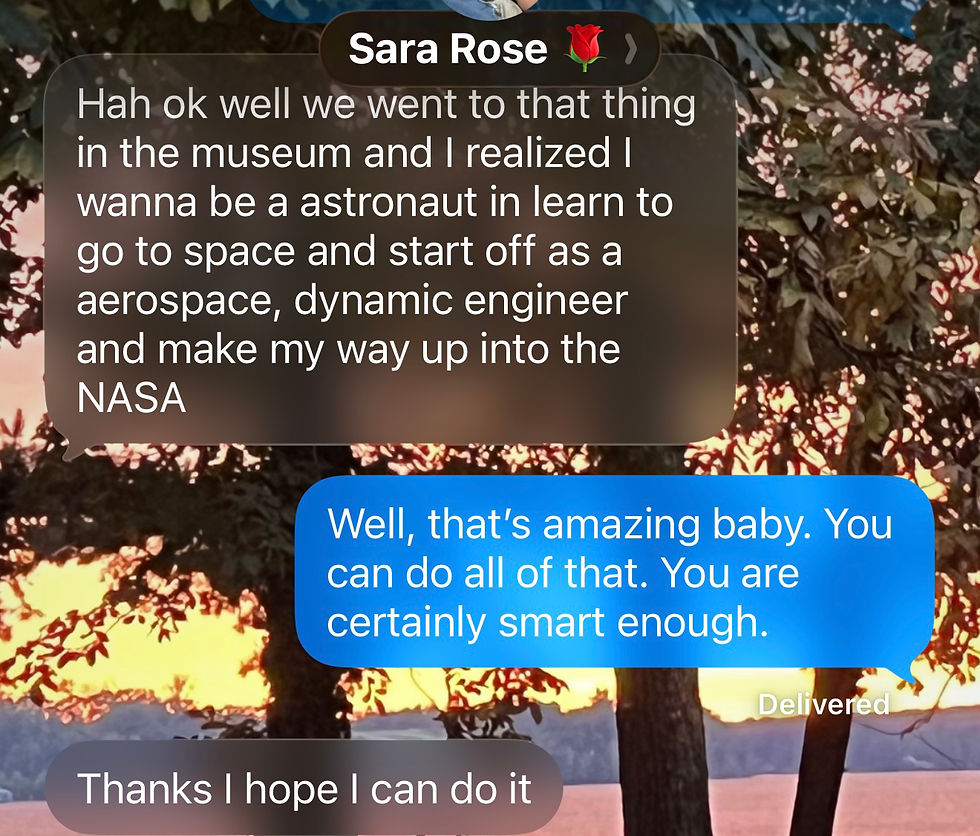
Her daughter texted to ask how her day had gone. Before Mara could answer, the child announced that she intended to work for NASA and become an aerospace engineer. Of course she did. Mara’s daughter was brilliant enough to look toward the sky and assume she belonged there.
Mara stared at the message with a mixture of pride and wonder. She had raised a girl who dreamed in rockets while feeling entirely incapable of navigating her own way home.
She tried to think of a response that could contain the day: the armor, the headlines, the political pressure, the courtroom, the witness, the killers, the man who could not accept no, the attorneys, the wasp, the free coffee, the laughter, the daughter planning to leave Earth and the husband whose absence could still reduce all of it to background noise.
There was no sensible way to explain a life like hers.
Even if Mara had written the story herself, she would not have included everything. Some details were too private. Some were too recognizable. Some were so thoroughly strange that putting them on paper would make fiction seem more believable than the truth.
This was merely the publishable version.
The glimpses she could safely give.
So Mara typed the only answer that was true.
“Good. Entertaining. Strange.”
Then she set down the phone, closed her eyes and wondered how a woman could be surrounded by people who loved her, defended her, laughed with her and witnessed pieces of her life—and still have no one person to whom she could tell the whole story.
It had been a good day.
It had been an entertaining day.
It had been a very strange life.
Judith L. Hampton
Attorney-at-Law
Hampton Law Firm


Comments